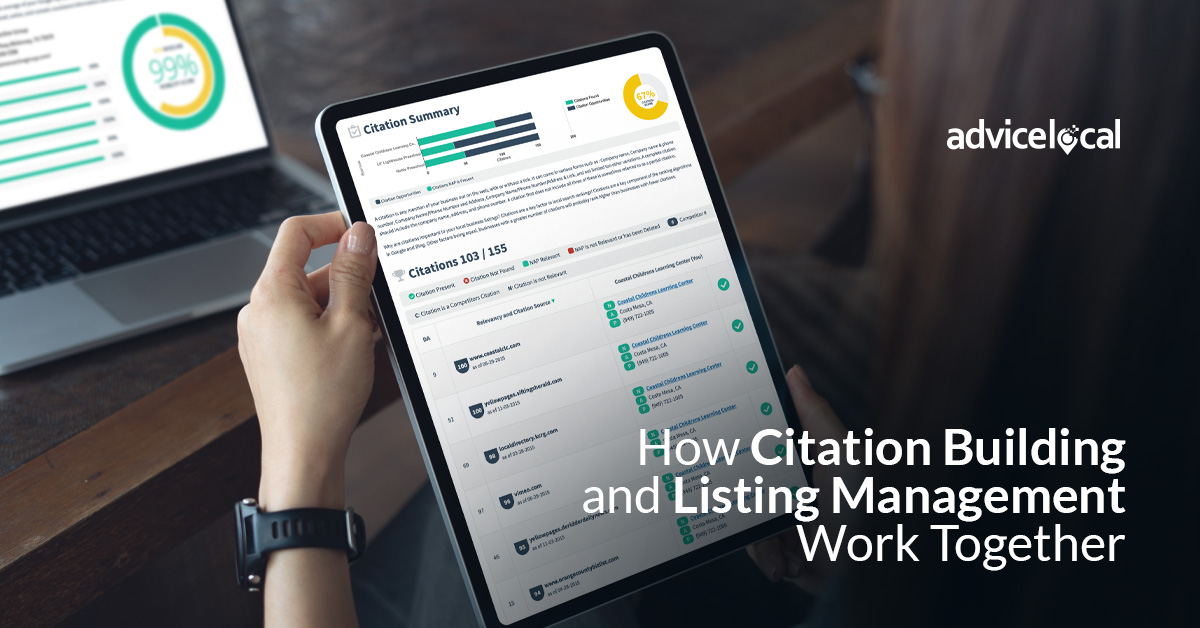

Most businesses have no idea how many places their information appears online. Without a professional approach to business listing management, key data can move unchecked across directories, apps and maps. And the more places that data appears, the harder it is to keep it accurate and consistent. Control over citation data begins with knowing how business data moves and spreads online.
How Business Data Spreads Online
Once a business’ details are listed online, they can spread quickly to a range of different platforms. Business data gets picked up and shared across a wide range of platforms including directories like Yelp, map services like Google Maps, review sites and voice search tools like Siri or Alexa.
Many of these platforms don’t actually collect data themselves. Instead, citation data is spread via data aggregators like Data Axle, Localeze and Foursquare. When these services distribute data, it goes out to numerous platforms at once. Of course, if a listing has a wrong address, old phone number or other mistake, this error can show up across the internet.
What Happens When Citation Data Is Unmanaged
When a business loses control of its citation data, any errors or changes will have real-world consequences. Different platforms end up displaying different versions of the same company, perhaps featuring conflicting phone numbers, the wrong address, or misleading opening hours.
When citation data is unmanaged, businesses and the agencies controlling their listings often don’t realize there is a problem, and this makes the situation even worse. Data aggregators might be syndicating error-filled business listings, and third-party edits could be creating inaccuracies on platforms where they’re allowed. And the result? Customers just don’t know what is true.
Why Listing Consistency Is a Trust Issue
Search engines and AI tools continuously assess the accuracy and consistency of business information across all platforms. When a business has data that doesn’t match, it signals that the information can’t be fully trusted.
Inconsistent local citations can damage AI visibility and organic search placement. However, even when a business is displayed, any inconsistencies mean that it’s still likely to lose customers. When inconsistencies are found by those researching a brand, it absolutely damages credibility. Plus, by losing control of citation data, a business will likely be harder to find and easier to dismiss, also reducing the number of customers it can reach.
Controlling Citation Data From One Place
The goal of citation data management is to shift from a scattered network of individual listings to a single, consistent source that flows out across a wide range of platforms. With one centralized data source driving every listing, you can ensure that information is accurate across directories, maps, data aggregators, and every other authority platform that counts.
If a business changes its address, that update can be made once and distributed across every platform from a single point of control. You then have a greatly reduced risk of outdated information sticking around (without you even realizing it).
How Citation Management Improves Discoverability
When thinking about local search visibility, it’s important to consider that Google wants to display the most relevant local pack, organic search and maps results. By improving citation consistency with complete and accurate listings, distributing this data to top-quality platforms, and monitoring for any issues, a business is likely to appear in Google search results for relevant searches.
Citations support business discoverability beyond Google, too, with trustworthy data relied on by other search engines, voice search platforms and AI tools. Ultimately, consistent citation data gives a business the best possible foundation for being found where its potential customers are searching.
Listing Management Helps Agencies Control Citations
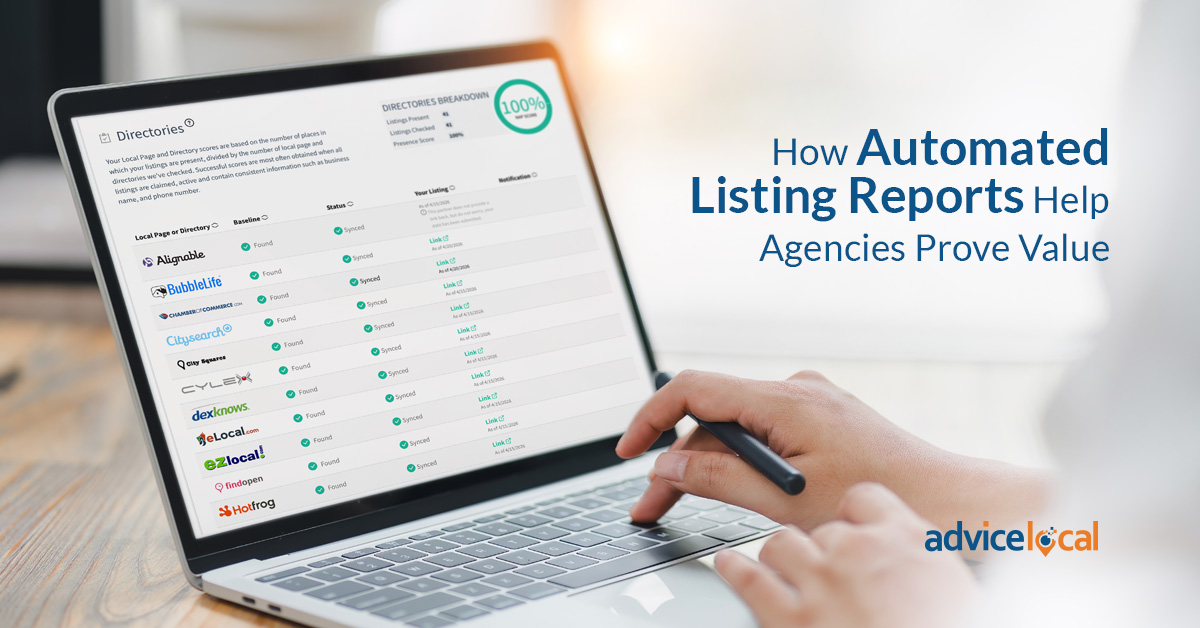
So far we’ve established that businesses need control over their citation data, but how exactly can that be achieved? Rather than creating and managing individual listings across platforms, many digital agencies choose a listing management solution. Listing management centralizes data, and this primary source is used to update business listings on mapping apps, directories and other platforms, while also continuously monitoring for inaccuracies. For a business, this means greater accuracy, visibility and customer trust.
Access the Leading Listing Management and Citation Software
Advice Local creates advanced tools that help agencies and marketers distribute and manage business listings. With our all-in-one dashboard solution, you can help your business clients be found across the directories, search engines and mapping apps that count. Request a demo online or call (214) 310-1356.